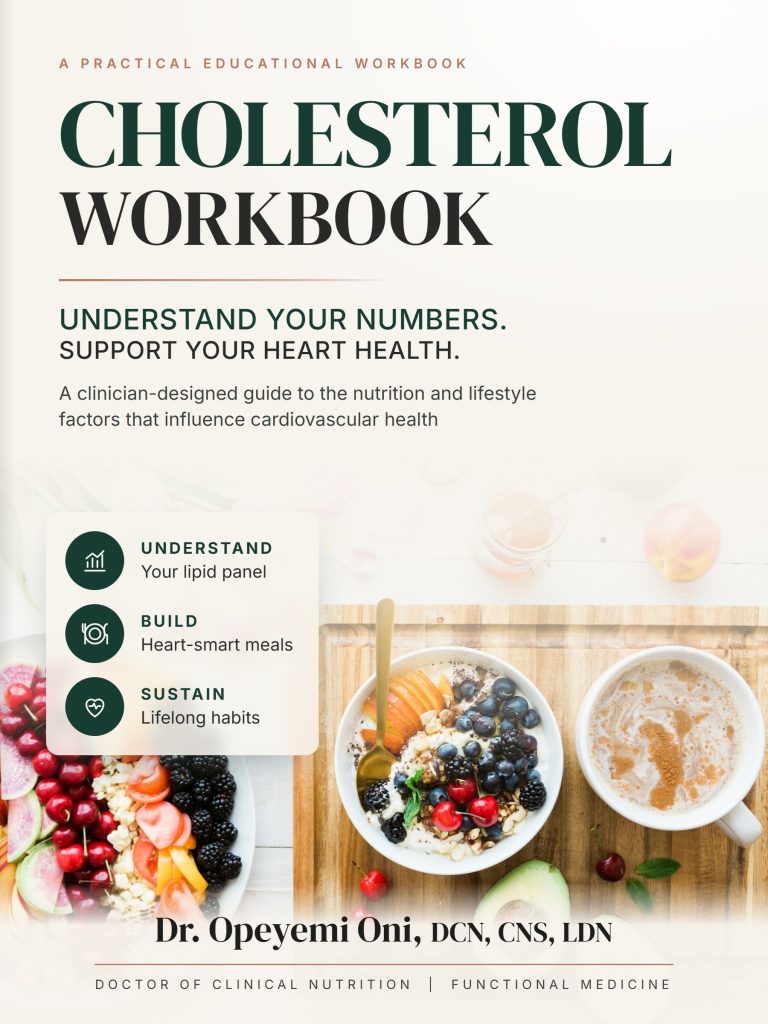
Yes. Nutrition can play an important role in cholesterol levels and cardiovascular health. The right approach depends on your lipid profile, overall health, medical history, medications, and current eating pattern, but several strategies are well supported by research.
Understanding the numbers
A standard lipid panel usually reports:
- LDL cholesterol, which can build up in artery walls when elevated
- HDL cholesterol, which helps carry cholesterol away from the arteries
- Triglycerides, a type of fat in the blood that is strongly influenced by refined carbohydrates, added sugar, and alcohol
- Total cholesterol, which combines several of these
Each marker can respond to different changes, which is why it helps to know which ones are out of range.
What the evidence supports
The type of fat matters. Replacing saturated fats, found in fatty cuts of meat, butter, and many baked goods, with unsaturated fats from olive oil, nuts, seeds, avocado, and fish can lower LDL cholesterol. Trans fats are best avoided entirely.
Soluble fiber helps. Oats, barley, beans, lentils, apples, and citrus contain soluble fiber, which can help reduce LDL cholesterol absorption.
The overall pattern counts. Eating patterns such as the Mediterranean diet, built on vegetables, fruit, whole grains, legumes, nuts, and olive oil, are consistently linked with better cardiovascular health.
Lifestyle plays a part. Regular physical activity can improve HDL and triglycerides, and limiting alcohol and sugary drinks can lower triglycerides.
Nutrition and medication
For some people, genetics strongly influence cholesterol, and nutrition alone may not bring levels into range. Nutrition and medication are not either-or choices; they often work best together. Decisions about medication should be made with your healthcare provider.